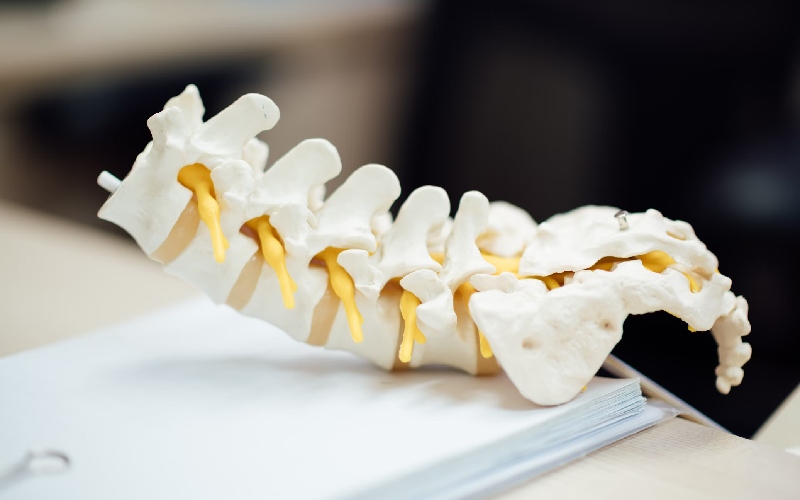
The narrowing of the areas surrounding your spinal column can be identified as spinal stenosis. The spinal nerves that connect your limbs and arms may be impacted by the strain on your spinal cord and those bones, or vertebrae.
It typically touches your neck or the lowest part of your back. The constriction may be inherited or the result of other issues such as slipped discs or arthritic conditions.
Read below to learn further about this medical condition!
1. Spinal Stenosis Symptoms
Perhaps you won’t experience any symptoms. However, if the constriction causes spinal cord pain or strain on your spinal nerves, you can have back pain, cramps, discomfort, and stiffness in your limbs.
ADVERTISEMENT
In more serious situations, you can experience bladder problems or even weak intimate performance. Elderly people over 50 are most likely to have it. However, if you have a medical condition that constricts your canal of the spinal cord from birth or if you have had a spinal injury, it may occur while you are younger.
2. Spinal Stenosis Risk Factors
As you grow older, your spine’s ligaments may become stiffer and denser. The distances between your spinal vertebrae can grow smaller as a result of aging cartilage and joints.
This can get worse if you have arthritis, which is more prevalent as you age. Several things can compress your spinal cord and neurons. The flexible cushions, or “disks,” that divide the bones in your spine may crack and rupture, for instance, if you have a ruptured disk.
Moreover, tumors may develop in the spine, and an unexpected injury may cause your spine to twist or break into pieces.
3. Spinal Stenosis Diagnosis
Your medical history will be questioned by your spine doctor because similar symptoms might be caused by trauma as well as other conditions. Your responses and endurance of muscles will be tested, and they will see if it hurts when you bend over.
MRIs and CT scans may also be recommended through the spinal stenosis diagnosis in order to examine your spinal column and look for any injuries, malignancies, or bone growth.
Your primary care spine doctor may be accompanied by a neurosurgeon, a rheumatologist, or an occupational therapist who assists you with specific activities. Usually, an orthopedic spine specialist or a nervous system expert would be consulted if spine surgery was necessary.
4. Pain Medications
Your physician may advise you to take OTC medications such as ibuprofen to alleviate spinal pain and swelling. Should they prove ineffective, they might administer a spinal cord stimulant injection, like cortisone, to reduce back pain.
Using an anesthetic drug to inhibit pain close to the injured nerve is an additional choice.
5. Spinal Stenosis Therapies
There are certain things that your orthopedic spine specialist could advise against doing when choosing the spinal stenosis therapies that will suit the stage of your medical condition.
Additionally, they could recommend specific exercises to build stronger back and abdominal muscles, which will support your vertebral column.
Swimming, riding, or brisk walking are examples of cardiovascular activities that can help you stay fit. In order to fortify your spine, you may require a support device if you are older or possess fragile stomach muscles.
6. Spinal Stenosis Surgery
Spine surgery intends to bolster your spine and release pressure from the cervical vertebrae and nerves. The areas of your spinal column that are putting strain on you may be removed, trimmed, or adjusted by your surgeon.
In the issue section, they might additionally fuse (connect) a few of your vertebrae together. Following spinal stenosis surgery, the majority of patients experience reduced spinal pain and improve their walking.
ADVERTISEMENT
However, coagulation of blood and an infection are conceivable, just like with many procedures. Another possibility is that you have a rip in the membrane enveloping your spinal cord. While they can all be treated, they might prolong your healing process.
ADVERTISEMENT