If you let your meal sit out for an extended period without optimal food storage or fail to reheat it to the proper temperature, this can lead to serious health problems.
If one of these requirements is not met, there might be massive microbial growth, which can bring about foodborne illnesses, resulting in nausea, loose stool, severe abdominal discomfort, and in instances of greater severity, even death.
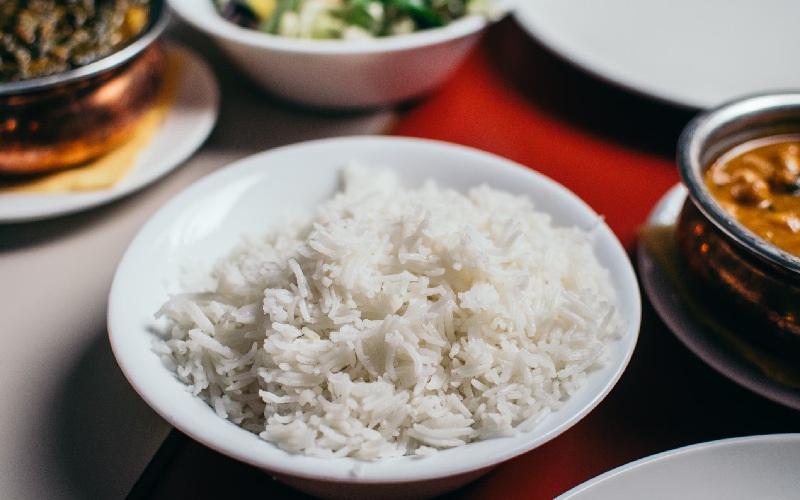
The safety of reheating rice has been an issue that has recently ignited a heated discussion on TikTok due to the so-called “reheated rice syndrome”.
Some content producers assert that they are wholesome even though they have lived their entire lives consuming reheated rice. Nonetheless, empirical data indicates certain tangible risks associated with this action.
ADVERTISEMENT
1. Food Storage Guidelines
The danger zone, which is defined as the temperature level ranging from 40°F to 140°F, is where foodborne pathogen types can develop at a rapid rate, as shown by the CDC.
Hot foods should be stored at 140°F or higher and then chilled after two hours from being cooked. Raw chicken salad and other cold perishable foods need to be stored at 40°F or lower. Refrigerated meals that were left out at room temperature for over two hours without being consumed ought to be thrown out.
These food storage guidelines include a wide range of foods, including starchy and carbohydrate-rich rice. Cooked rice could look like an element that can be left for more time or does not need to be reheated specifically, in contrast to raw chicken or meat. It is not quite the case, though.
2. Certified Microbiologist TikTok Video
Rice contains a foodborne pathogen known as Bacillus cereus, as a certified microbiologist clarified in a recently released TikTok video regarding reheated rice syndrome.
Bacillus cereus can produce extremely harmful toxins when the outside temperature of your prepared rice reaches the danger zone. These toxins can cause you to become very sick, the CDC warns.
Thus, it follows that you should never leave food that needs to be prepared outside at the temperature of the room. You have the option of either eating it hot after it’s been thoroughly cooked or cold after it’s been chilled.
The certified microbiologist shared with her followers the fact that this food pathogen is related to the bacteria anthrax, tetanus, botulism, and C. diff. on the bacterial tree, which should give them an idea of how possibly hazardous the bacterium can be.
3. The Danger of the Bacillus Cereus Bacterium
The National Health Service states that Bacillus cereus is present in raw rice and can persist in cooked rice as well. Similarly, a CDC report acknowledged the seriousness of Bacillus cereus and linked the food pathogen to fried and boiled rice.
This, the microbiologist clarifies, is due to the organism’s ability to produce what is commonly referred to as an endospore, a term that describes what happens when a bacterial cell chooses to hibernate when there is insufficient water, an unfavorable temperature, or an inadequate supply of vital nutrients.
As a result, the cell essentially dries out into a tiny seed that it will eventually release when the prepared grain reaches ambient temperature. The National Health Service states that as soon as the microbe’s spore hits the danger zone, it may lead to microbial growth after which harmful toxins are released into your rice. The germs cannot be eliminated by reheating the grains for an extended period or at an elevated temperature.
4. How to Deal with Cooked Rice
To prevent the grains from coming to room temperature, rice enthusiasts should package and refrigerate their cooked rice right away. To ensure that the internal temperature of the rice does not rise above 40°F, reheat it as soon as it is ready.
Prevent packing too much food into containers and avoid stacking or crowding jars together as this can impede airflow for optimal chilling.
ADVERTISEMENT
The rice can also be rinsed before cooking if you want to be extra vigilant. Though not all spores will be removed, washing your rice will lessen their likelihood. In addition, washing will remove any remaining ions and grime.
ADVERTISEMENT