• About
  • Contact us
  • Disclaimers
  • Terms
  • Privacy
  • Anti-spam
  • Opt-out
  • Do Not Sell My Info
  • Cookie (EU)
  • Newsletter Sign Up
Biglaps.com
  • Home
  • Health
  • Nutrition
  • Tips & Tricks
  • SUBSCRIBE
No Result
View All Result
Biglaps.com
  • Home
  • Health
  • Nutrition
  • Tips & Tricks
  • SUBSCRIBE
No Result
View All Result
Biglaps.com
No Result
View All Result
Home Nutrition

6 Effective Ways to Cut Down Excessive Salt Consumption

Alan Smith by Alan Smith
in Nutrition
6 Effective Ways to Cut Down Excessive Salt Consumption

© pixabay

Share on FacebookShare on Twitter

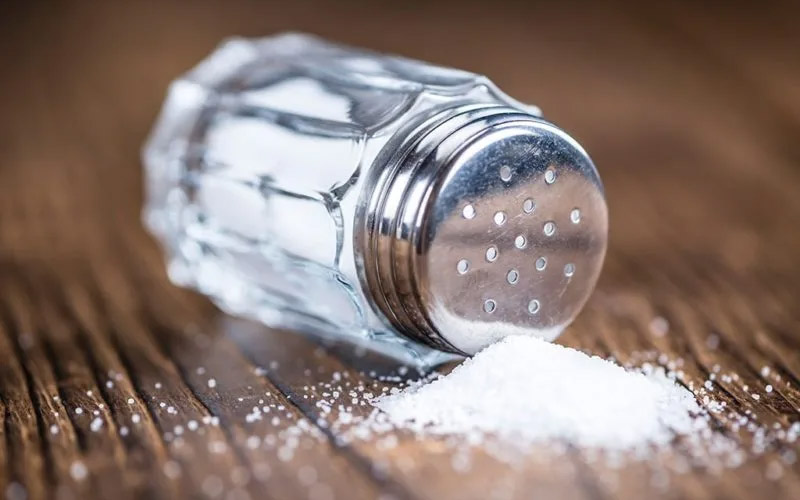
The Centers for Disease Control and Prevention (CDC) declared that consuming excessive amounts of salt might increase your risk of high blood pressure, stroke, and cardiac arrest.  This is why their following warning is so ominous: They claim that more than 90% of Americans consume too much salt.

The most recent recommendations state that people should keep their daily salt intake at 2,300 mg. However, according to the World Health Organization (WHO), the majority of individuals generally take between 9,000 and 12,000 milligrams each day, which poses a serious risk to their health.

Related articles

6 Unexpected Foods That Quietly Raise Your Heart Disease Risk

4 Health Items on Costco That Aren’t As Healthy As You Think!

Learn six techniques to reduce your salt intake for optimal heart health in the next few paragraphs.

1. Check the Nutritional Info and Plan Your Meals

Consider your whole consumption in the framework of a low-sodium diet, then put together meals that all fit within the advised range to reduce your salt consumption.

ADVERTISEMENT

The simplest method to achieve this is to become familiar with the nutritional content of any packaged goods and choose those with the least salt. 

According to the CDC, the Food and Drug Administration (FDA) has set a limit of 600 milligrams of salt per meal as the minimum amount required for a meal or main course to be considered healthy.

2. Think About Single Portions

It is essential to learn how to read food labels because the salt amounts listed on them refer to one serving size, which means that if you consume more than one portion, your sodium consumption will soon double or triple. 

You may avoid going over your salt allotment by checking the number of servings in each container and being aware of your quantities. You may reduce your intake of salty meals by filling your plate with fresh produce, healthy grains, lean meats, and veggies.

3. Replace Synthetic Products with Organic Substances

While adding salt to food might increase its sodium content, the bulk of the salt you consume stems largely from processed or pre-packaged meals. The CDC advises to replace processed foods with fresh, unprocessed components whenever feasible. 

Uncertain about which particular goods to avoid? Ready-made sauces, spice blends, and other “warm and serve” ingredients are discouraged by health organizations because they frequently include high salt levels.

To reduce your sodium intake, experts say that you should always choose fresh meat over preserved, salted, or smoked meat.

4. Add Tasty, Sodium-Free Items Instead of Salt

When you cut back on salt, your meal may taste bland if you are used to consuming higher levels of sodium. However, incorporating delectable, salt-free items into your meals might make your dietary adjustments more appealing and, thus, more enduring.

Not sure where to start? Try adding salt-free seasonings, onions, garlic, lime juice, fresh basil, or hot peppers to your cuisine, to mention a few. Try various flavors until you find lower-sodium dishes that make you want to prepare and consume them.

5. Be Careful When You Eat Out

Eating out and getting takeout can significantly raise your salt consumption without you being aware of it. Experts advise choosing home-cooked meals whenever feasible and saving fast food or lean cuisines for special occasions.

If you do eat out, you may always ask for your meal to be prepared without salt or inquire about which dishes on the menu have the least quantity of salt. You may also think about dividing a meal with a different person or keeping half for another time to help you eat less.

6. Don’t Give up! Transformation Takes Time

Even if you completely give up salt, it is possible that the first few weeks or months will be difficult for you to adapt. The National Kidney Foundation claims that a person’s liking for salt is an acquired taste that may be changed. 

The process of becoming accustomed to eating food with significantly less salt takes about eight weeks, but once it is complete, it becomes challenging to consume items like potato chips since they taste overwhelmingly salty. 

Bottom Line

ADVERTISEMENT

Remember to be kind to yourself now and concentrate on the gradual advantages you will experience as you progressively reduce your salt intake. You will start to want salty meals less frequently once you have gotten used to your new baseline.

ADVERTISEMENT
Related Posts

6 Unexpected Foods That Quietly Raise Your Heart Disease Risk

6 Unexpected Foods That Quietly Raise Your Heart Disease Risk

by Alan Smith
November 10, 2025
0

The Hidden Dangers on Your Plate When you think about keeping your heart healthy, you probably imagine cutting out fried food, soda, or fast-food burgers. But...

4 Health Items on Costco That Aren’t As Healthy As You Think!

4 Health Items on Costco That Aren’t As Healthy As You Think!

by Alan Smith
July 29, 2025
0

It's amazing in terms of convenience and affordability. But not everything stacked over here is a big steal, especially when it comes to some health care...

Never Add This Popular Ingredient to Your Healthy Smoothies

Never Add This Popular Ingredient to Your Healthy Smoothies

by Alan Smith
July 24, 2024
0

Smoothies have grown to become among the best healthy breakfast ideas around the world since they provide a satisfying, nourishing, and time-saving meal or healthy snack.  Nevertheless, there...

Why Seeds Are the Most Underrated Super Foods

Why Seeds Are the Most Underrated Super Foods

by Alan Smith
June 26, 2024
0

Eating nutritious food entails adding a bunch of seeds to your meals to significantly improve the state of your health in general.  Whether you add pumpkin...

10 Foods That Wreak Havoc Your Heart-Healthy Diet

10 Foods That Wreak Havoc Your Heart-Healthy Diet

by Alan Smith
June 24, 2024
0

Human heart is a vital organ in our bodies that requires clean eating to remain intact. Following a healthy meal plan is indispensable to lead a...

Sign up for our FREE newsletters

Get the most of your daily life with all the genuine tips and tricks you’ll wish you knew before.

About Alan

Join me to get the most of your daily life with all the genuine tips and tricks you’ll wish you knew before. From home life and creative living to your personal well-being, you’ll find new ideas every day to improve your overall life.

  • About
  • Contact us
  • Disclaimers
  • Terms
  • Privacy
  • Anti-spam
  • Opt-out
  • Do Not Sell My Info
  • Cookie (EU)
  • Newsletter Sign Up

© 2020-2026 Biglaps.com. All rights reserved. Our website services, content, and products are for informational purposes only. Biglaps.com does not provide medical advice, diagnosis, or treatment.

No Result
View All Result
  • Home
  • Health
  • Nutrition
  • Tips & Tricks
  • SUBSCRIBE

© BigLaps | All rights reserved, 2022

We use cookies on our website to give you the most relevant experience by remembering your preferences and repeat visits. By clicking “Accept All”, you consent to the use of ALL the cookies. However, you may visit "Cookie Settings" to provide a controlled consent.
Cookie SettingsAccept All
Manage consent

Privacy Overview

This website uses cookies to improve your experience while you navigate through the website. Out of these, the cookies that are categorized as necessary are stored on your browser as they are essential for the working of basic functionalities of the website. We also use third-party cookies that help us analyze and understand how you use this website. These cookies will be stored in your browser only with your consent. You also have the option to opt-out of these cookies. But opting out of some of these cookies may affect your browsing experience.
Necessary
Always Enabled
Necessary cookies are absolutely essential for the website to function properly. These cookies ensure basic functionalities and security features of the website, anonymously.
CookieDurationDescription
cookielawinfo-checkbox-analytics11 monthsThis cookie is set by GDPR Cookie Consent plugin. The cookie is used to store the user consent for the cookies in the category "Analytics".
cookielawinfo-checkbox-functional11 monthsThe cookie is set by GDPR cookie consent to record the user consent for the cookies in the category "Functional".
cookielawinfo-checkbox-necessary11 monthsThis cookie is set by GDPR Cookie Consent plugin. The cookies is used to store the user consent for the cookies in the category "Necessary".
cookielawinfo-checkbox-others11 monthsThis cookie is set by GDPR Cookie Consent plugin. The cookie is used to store the user consent for the cookies in the category "Other.
cookielawinfo-checkbox-performance11 monthsThis cookie is set by GDPR Cookie Consent plugin. The cookie is used to store the user consent for the cookies in the category "Performance".
viewed_cookie_policy11 monthsThe cookie is set by the GDPR Cookie Consent plugin and is used to store whether or not user has consented to the use of cookies. It does not store any personal data.
Functional
Functional cookies help to perform certain functionalities like sharing the content of the website on social media platforms, collect feedbacks, and other third-party features.
Performance
Performance cookies are used to understand and analyze the key performance indexes of the website which helps in delivering a better user experience for the visitors.
Analytics
Analytical cookies are used to understand how visitors interact with the website. These cookies help provide information on metrics the number of visitors, bounce rate, traffic source, etc.
Advertisement
Advertisement cookies are used to provide visitors with relevant ads and marketing campaigns. These cookies track visitors across websites and collect information to provide customized ads.
Others
Other uncategorized cookies are those that are being analyzed and have not been classified into a category as yet.
SAVE & ACCEPT