Humans learn to walk after 8 to 18 months of being born and spend the rest of their lives walking. However, this doesn’t necessarily mean that they know how to walk correctly. When performed properly, walking has many benefits on our overall health. Unfortunately, many are suffering today from back, shoulder, and foot pains, mostly Achilles or plantar fasciitis, which are mainly caused by bad walking habits and techniques. You could be on the way to developing one of these complications without even knowing it. Here are 12 walking habits for better health and well-being!
12. Walk heel first, but don’t slap
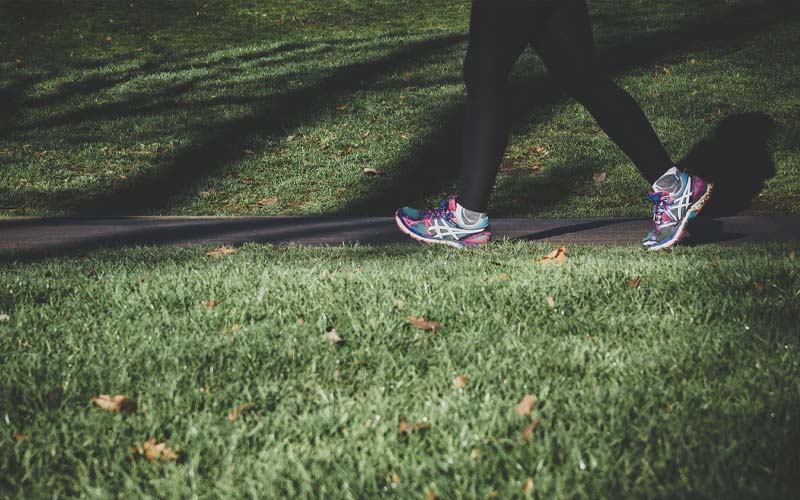
Physicians and doctors are encouraging people to walk heel first, then roll the foot from heel to toe, and then push with the toes. The entire process is called “the gait cycle.” However, you must be careful about what it really means. Your heel is in direct contact with your Achilles tendon, which makes it a very stress-sensitive area. When walking, you should start heel first, but you should make sure you’re not putting too much stress on it.
Another thing you need to make sure not to do is slapping the rest of your foot on the floor. When you land heel first, it’s important that you roll your foot from heel to toe and then push with your toes. If instead you just slap your heel-to-toes area on the ground, especially on concrete grounds, you are causing future problems to your feet. This phenomenon is called “Slap Gait” and is usually signaling deeper foot problems, like muscle weaknesses or paralysis.
11. Keep your head up and back straight!
A good posture is a key to fighting off pain and stress in your entire body while walking. If your back is not straight and your chin is dropped to the ground like when you are using your phone for example, you are putting way too much strain on your back, neck, and shoulders.
ADVERTISEMENT
This leads to future irreversible problems in that area. You should keep your stance balanced and straight, and your chin should be parallel to the ground at all times. This way, no unnecessary strain will be affecting you negatively.
10. Relax your shoulders
One of the most important walking habits is to relax your shoulders! Do not drop them too low until you’re dragging them or they start restricting arm and hand movements. But also don’t contract them up too much until this same effect happens. Your shoulders must be parallel to the ground at all times!
9. Engage your core
Your abdominal muscles should be clenched just enough to support you while you’re walking. Your core is the main support for the entire trunk, if it isn’t engaged, your trunk might start swinging or rotating abnormally. This effect leads to serious problems later, mainly foot drop.
8. Keep a steady pace
A healthy human being walks at a pace of 3 to 4 miles per hour. If you want to take a slow walk or maybe you are late and need to walk faster, you should make sure you are not constantly changing your pace while walking.
Choose any speed you need, but keep it steady. Constant changes in your pace confuse your muscles and put some strain on them. If this becomes a habit, your walking muscles might be injured.
7. Don’t take too long or too short strides!
A stride is the walking distance of one foot, or how long a foot takes to redo the same move, for example, land on the heel. This distance is usually around 5ft (1.5m) give or take (2.5ft a step).
If your stride is too long, your front leg becomes too straight, and when you land it on the ground, your knee literally cracks backward. On the other hand, if your stride is too short, your legs are under unnecessary stress from moving them more than you need. Plus, you might trip if you keep walking like that.
6. Have your toes as forward as possible
Though some people have their toes tilted too much while walking, this habit is the worst ever. Your feet are connected to muscles all over your body, mainly your legs. If you twist your toes, you are also twisting some muscles from the top. Twisting these muscles strains them and could lead to injury, which is not something you want, right?
5. Tuck in your Gluteus Maximus (Buttocks)
Your Gluteus Maximus, the biggest muscle in your whole body, is the one responsible for keeping your hips leveled while walking. If you don’t engage it by keeping it as clenched as possible while walking, your hips start tilting, which causes your trunk to start swinging to hold your body in balance. Your buttocks are there to naturally do this job, so let them do it!
4. Don’t bend too forward or backward
If you are bending too forward, you are ruining your posture by hunching your back. If you are bending backward, your legs become straighter when landing them, which causes the cracking effect explained in point 6. Stay as balanced and straight as a pole.
3. Engage your hands
For a healthier walking stance, you should engage your arms and hands as well. Keep your hands partially clenched (do not close them) while your arms should swing left-arm to right-leg and vice versa. If you feel like your arm movement is restricted, it could be due to hidden pain or weakness of the muscle.
2. Choose good walking shoes
To keep your feet protected, especially your heels, you should invest in good shoes. This advice is not just for walking, but for any activity you want to engage in. Staying barefoot can cause your feet to become flat from the bottom, which then leads to foot slap, foot drop, and other complications.
1. Make stretching one of your essential walking habits
Your feet are supported by muscles, which you should stretch regularly so that they don’t lose their elasticity over the years.
To truly benefit from walking as an easy exercise for your entire body, you should pay close attention to your posture and any external factors that could lead to unwanted side effects. It’s important to keep your core engaged, your trunk not tilted, and your head centered.
ADVERTISEMENT
Try to engage your arms as well for a more balanced posture. These are the perfect walking habits to adopt for better health, especially in the long run! If you feel like some parts of your body are restricted, you should see a doctor before the problem grows into more severe complications.
ADVERTISEMENT